An asymmetric game is only fair if both sides win about as often, whatever the number of cops. This chapter sets the targets and the dials Dafydd uses to reach them.
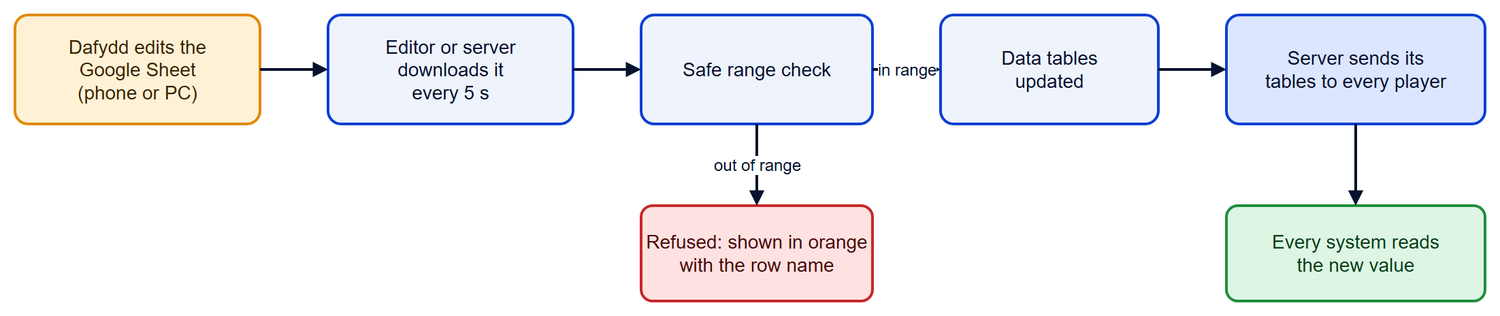
Live tuning: a sheet edit reaches every player in seconds, and unsafe values are refused
From the tuning sheet to the systems that use each value
The targets
Measure
Target
Why
Van win rate
45% to 55% at every cop count
Neither side should feel the game is rigged
Round length
4 to 6 minutes
Short enough to play many rounds in a session
Strikes per round
At least one in most rounds
The police must feel they can catch the van
Escapes
The van escapes in about half of rounds
Escaping must feel possible, never certain
The dials
Each dial is one value on the tuning sheet. The table says what turning it up does.
Dial
Turn it up and
Helps
Strikes until the police win
Rounds run longer; the van gets more chances
Van
Deliveries for the first star
Exits open later
Police
Exits that open
More escape routes to guard
Van
Arrest time
Cops need longer to box the van in
Van
Ring size
Easier to arrest from further away
Police
Search circle size
Police know less about where an illegal van is
Van
Time before an idle van is searched
Hiding lasts longer
Van
Ability cooldowns
Fewer uses per round for that side
The other side
Scaling with the number of cops
More cops make the police stronger in a chase. The dials above can be set per cop count, so the game stays fair from one cop to four. The pre-production model balanced a cash target against the cop count; that target was retired when strikes replaced the clock, and balance is now checked by playing.
 Shady Shipping